From July 25th through July 30th, 2022, multiple complex thunderstorms developed south of I-64 and not only brought record-setting rain and deadly flash flooding but also devastating river flooding to Eastern Kentucky and Central Appalachia. The Robinson Center was not exempt from the devastation. Experiencing extensive damage to multiple buildings and total decimation of others, facility staff relocated the Administration and Business Offices to a makeshift area in the Auditorium and restored normalcy as was possible professionally while trying to restore normalcy in their personal lives as well.
Despite these challenges, one thing remained constant. The University's Land-grant Mission continued to emphasize teaching, research, and engagement to promote the well-being and success of the leaders in the next generation. Together, we learned; we discovered; and we engaged every single day, and this informational session will highlight the initial aftermath and impact of this historic flooding event on a facility that has been around since 1923.
Participants will: visualize how stakeholders have strategically rebuilt the facility to prepare for the next one hundred years of service. Experience firsthand accounts for the initial devastation to iconic structures, equipment, and destroyed research. Gain a better understanding of how stakeholders have rebuilt this research station to better promote UK's Land-grant Mission more efficiently and in a broader spectrum. Recognize when we made it past the trauma of the initial event to the healing aspect. More importantly, know when our focus became more about the present, the future, and no longer about the past. Our future is bright, and we want to share it with you.
Water has shaped and influenced the natural and cultural landscapes of Appalachia, especially as powerful sites of historical significance, cultural and collective memory, place-based identity, and everyday community life.
This presentation aims to share insights and links created through the synergistic exchange of experiences and interests around water in Appalachia. The Appalachian Water Humanities Collaborative (AWHC) is an interdisciplinary group of scholars, faculty, and students at the University of Kentucky that began in 2025 to explore the role and relationships to water in Appalachian humanities research and scholarship. Bringing together scholars from diverse backgrounds and academic disciplines, spanning environmental studies, anthropology, history, sociology, and other – to participate in deep conversations about how water influences communities and individuals across social, cultural, economic, and political dynamics. Holding and creating space for all scholars to engage in discussions, shared readings, and members discover commonalities, connections, and ways in which water shapes historical experiences and contemporary challenges in Appalachian communities.
This presentation will share some of the preliminary themes that have surfaced from the first iteration of the Collaborative, specifically the role of building interdisciplinary ecosystems around the concept of water and waterways, the ways water/waterways anchor place-based identity and collective memory, and the ways in which people and communities relate to water. Water is often a focal point in the vernacular and in stories, folklore, and traditions from the region. Water can be thought of as friend or foe, companion or adversary, complicating how people engage with it, especially as extreme weather and disasters are becoming more frequent and severe. The AWHC succeeded in bringing together diverse scholars to foster conversations and brainstorm ideas, opportunities, and potential solutions to better understand our human and more-than-human relationships with water and the environment.
This presentation will highlight how an interdisciplinary humanities framework can enhance Appalachian studies and scholarship while continuing to foster conversations between academic research and local community knowledge.
In order to explore the meaning, experience, and perception of art-making in hurricane-impacted communities, a regional, qualitative research study was conducted through a series of interviews with a diverse sample of community members from the Northwest Florida and Coastal Alabama area. This study explores the role of visual arts in post-hurricane recovery, looking specifically at community identity and the landscape of post-hurricane arts engagement.
This 20-minute presentation will present the findings of this research, with an emphasis on sharing the voices of those impacted by hurricanes in the area. Providing space and opportunity where disaster-impacted people can speak about their experiences is vitally important in supporting long-term recovery. The stories and experiences shared can include non-verbal or visual expression, as found in the creative arts. Engagement with the arts is shaped by, and supported by, the community members who comprise an area. This engagement can be particularly beneficial during repeated hurricane impacts, long recovery times, and compounding disaster events.
Participants were asked a series of both closed and open-ended interview questions relating to their role and connection to hurricane-impacted areas, the effect of the storm on their community, and their specific compounding circumstances in recovery. Questions also explored post-hurricane material culture and the participant’s connection to art-making, including social arts, professional arts, and virtual arts engagement. The participants of this research project found value in each area of arts engagement, even if it was not an area they typically engaged in. They identified several benefits regarding the use of arts in recovery: the capacity for self-expression, the ability to give voice to the voiceless or vulnerable, the ability to create beauty (which in turn may increase industry, joy, and wellbeing), the ability to create spaces for healing, as well as promoting empathy and understanding for the experience of hurricane impacts.
Overall, the arts can help to humanize the experience of hurricanes by acknowledging not only the disaster- impacted person with the context of their social and community identity, but also by centering their voices in recovery, so that stakeholders and policymakers can know not only about the immediate recovery needs, but the long term needs as well, helping to fund programs that provide dignity and empathy to the post-hurricane experience.
Crystal is an arts-based researcher and educator and holds a doctorate in Medical Humanities from Drew University, where her dissertation work focused on the role and meaning of visual arts in hurricane recovery. She is a current member of the UF Interdisciplinary Research Lab and... Read More →
Friday September 25, 2026 11:15am - 11:45am EDT 330EGatton Student Center, 160 Ave of Champions, Lexington, KY 40508
In this session, we will explore how fire behaves within a structure and look to understand how it affects common collections materials. We will examine basic ways to salvage and then triage art and artifacts that have been affected by a fire. Fire health hazards that rescue crews should be aware of will also be covered. We will look at fire prevention methods and techniques to help stop fires from happening or slow a fire from spreading. Finally we will discuss how to build a rapport with your local fire department and create joint training opportunities between them and the institution's staff.
This session will outline the nation's first higher-education pedagogical framework in Arts Emergency Management (AEM), designed and implemented by the University of Kentucky's Department of Arts Administration. Examining principles and practices in emergency management comes at a critical moment in arts management education, as the severity and costs of disaster events are increasing in scale and impacting arts communities (IFRC 2021; IPCC 2023; FEMA 2023). It also addresses calls from US arts readiness leaders for a more dedicated emergency management curriculum in arts management higher education programs (Carey and Lakin-Hayes 2012; National Endowment for the Arts 2016).
Since 2018, the Department has worked to address current gaps in US arts and cultural management education standards by offering full-semester courses designed to expand knowledge and skills for addressing emergencies, disasters, and other crises. Building on the success of its first full-semester course, the Department introduced a 12 credit-hour Arts Emergency Management certificate in 2024 that addresses each phase of the emergency management cycle: mitigation, preparedness, response, and recovery. The certificate's objectives include both theory and practice, developing technical managerial approaches to crisis and response decision-making, as well as scientific inquiry into why and how the arts sector can be prepared for extreme events, and what relationships need to be built to do so.
The session provides two key perspectives: one that is scholarly, connecting current and notable literature in emergency management and disaster science as a foundation in the arts emergency management pedagogy; the other is programmatic, outlining how this literature pragmatically fits into curricula across an undergraduate and graduate certificate program, and how it can be structured to benefit the student experience.
In addition to highlighting the framework, the session will reveal findings from interviews with both graduate and undergraduate students who have taken AEM courses, including their motivations for taking the courses and takeaways that have informed their professional careers.
Dr. Rachel Shane is the Gary B. Knapp Endowed Chair of Arts Administration and Professor at the University of Kentucky in the College of Fine Arts. She also holds a dual appointment with the College of Fine Arts and the Gatton College of Business and Economics.
She oversees three degrees in the Department of Arts Administration (BA, MA, and PhD in Arts Administration) as well as related graduate certificates and professional development offerings. She also teaches a variety of courses in the degree programs. Dr. Shane is the co-editor of... Read More →
Assistant Professor, Arts Administration and Coordinator, Kentucky Heritage Emergency Response Network, University of Kentucky
Leah Hamilton, PhD, is an Assistant Professor of Arts Administration at the University of Kentucky, where she directs the Arts Emergency Management Certificates and leads the Arts Emergency and Disaster Research Initiative (AEDRI), a university-based research lab dedicated to developing... Read More →
Friday September 25, 2026 11:45am - 12:15pm EDT 231Gatton Student Center, 160 Ave of Champions, Lexington, KY 40508
When disasters strike, communities reach first for two things: safety and meaning. Traditional health education often focuses on physical preparedness—first aid, sheltering, communication plans—but creative practices are equally vital to recovery.
Music, storytelling, movement, journaling, and visual art offer culturally grounded strategies that help people process fear, reconnect with one another, and make sense of disruption. Drawing on my training as a Certified Health Education Specialist, this session will explore how arts‐based activities function as evidence‐informed tools that support psychological recovery and reduce the long‐term impacts of trauma. Using examples from public health, community arts, and disaster response, I will illustrate how integrating creative practices into preparedness education can help communities preserve cultural identity, articulate collective memory, and build adaptive coping mechanisms before a crisis occurs.
Participants will engage in hands‐on exercises demonstrating how arts activities can be embedded into emergency planning workshops, shelter environments, and community outreach. Attendees will leave with practical, transferable strategies for using creative expression to enhance public health outcomes, foster resilience, and sustain cultural expression in times of crisis.
Target audience: • Health educators, public health practitioners, emergency managers • Arts and culture leaders (museums, archives, libraries, arts councils) • Educators, community organizers, extension and library staff
Accessibility and Inclusion • Activities follow trauma informed facilitation (opt in, content warnings, no forced disclosure). • Multiple modes (listen, write, draw, speak) and low literacy options.
1. Executive Summary In July 2022, a century-defining flood devastated Perry, Letcher, Knott, and Leslie counties. Amidst this loss, the ArtShine Project was born as a rapid-response creative intervention. This presentation details the journey from a modest goal of 100 "ArtShine Boxes" to a multi-state movement (ArtShine 2.0 and 3.0) that proves art is an essential service in times of crisis.
2. The Origin Story: "A Light in the Dark" The presentation will highlight the collaborative effort that launched the initiative: The Founders: Developed by Lindsey Branson (Director of Education) and local artist/musician Jen Tackett. The Rapid Scale: How an initial goal of 100 boxes escalated to 500 boxes created and distributed within a single week. The Message: Every box carries the vital reminder: "You are Loved."
3. Presentation Pillars & Key Content Segment -> Focus Area ->Key Highlights The Immediate Need -> Disaster Response ->Replacing lost crayons, watercolor sets, and rhythm instruments for children who lost everything. The ArtShine Box ->Anatomy of a Kit ->A look inside the bags: Acrylic paint pots, oil pastels, and sketchbooks as tools for emotional processing. Regional Impact -> "Where We Serve" -> Mapping the reach across Perry, Knott, Letcher, Leslie, Pike, and Floyd counties. The Evolution ->2.0 & 3.0 ->How the model moved beyond KY to help victims of Hurricane Helene and continued local challenges.
4. Visual & Tangible Assets The "ArtShine Gallery": A visual showcase of the white boxes labeled "You are Loved" and photos of the volunteer-led assembly lines at the Art Station. Supply Spotlight: A "Needs List" slide showing how simple items (crayons, markers, rhythm instruments) translate into therapeutic tools. Volunteer Impact: Footage of the "ArtShine 2.0" mobilization, showing the Appalachian spirit of "paying it forward" to neighboring states.
5. Call to Action: Sustaining the Shine The presentation concludes with a roadmap for future readiness: The Amazon Wishlist Model: How digital crowdsourcing fuels local relief. Direct Support: Encouraging sponsorship of the ArtStation to keep inventory ready for the next "ArtShine" deployment. Closing Statement: "The ArtShine mission is to illuminate the healing potential of the arts during our community’s most challenging times."
Timothy Deaton, is the Executive Director of the Appalachian Arts Alliance. After studying Music and Theatre Education at Morehead State University, and a short stent in New York performing in numerous Theatrical and Operatic Productions, Tim returned to the Mountains, where his heart... Read More →
Lindsey Branson is from Viper, Kentucky. That’s the place where she fell in love with all things that involve the arts. Always participating in choirs, singing competitions, and that eventually led to playing instruments.Lindsey taught herself to play the guitar at the age of 16... Read More →
Friday September 25, 2026 2:15pm - 2:45pm EDT 330EGatton Student Center, 160 Ave of Champions, Lexington, KY 40508
The Alianza Cultural para Emergencias de Puerto Rico (Alliance for Cultural Emergencies in Puerto Rico) (ACEPR) was established in 2019 to assist cultural, LAM, and arts organizations throughout the Archipelago in minimizing damage to their collections during natural hazards or man-made disasters. Founded in the aftermath of Hurricanes Irma and María in 2017, ACEPR has utilized the lessons learned from these events to foster a more resilient community. Our focus is on prevention through educational programs and initiatives that help safeguard our cultural heritage.
One of the challenges in the response process for cultural organizations in 2017 was the lack of a consolidated database of contact information that would enable responders to reach the affected cultural community more quickly. This led local cultural organizations and personnel, in collaboration with FEMA, to develop a list that could be used throughout the recovery process. Thanks to technology, we have learned other ways to use contact information effectively not only in an emergency scenario, but also as a prevention and mitigation strategy. With support from the Mellon Foundation, in 2025, ACEPR launched the “Cultural Mapping for Emergency Response” project as part of its Collections in Response initiative. Its main goal is to develop a collaborative network to increase the visibility of Puerto Rico’s cultural heritage and support its protection before, during, and after emergencies. Using a georeferenced database, the mapping initiative enables the identification of organizations and collections, improves communication with custodial institutions, and facilitates quick, effective coordination, both before and during prevention, response, and recovery efforts.
In the presentation, we will discuss how technology (through ArcGIS and Storymaps) is used to strengthen our capacity to prepare for and respond to uncertainty, ensuring the sustainability of our cultural heritage. We will present our data compilation strategy, the educational tool created to engage more organizations, and the next phases of the project that include: visualizing active or vulnerable heritage zones, connecting similar institutions, planning for collection relocations affected by climate change, and building micro-networks that strengthen community resilience and support during difficult times.
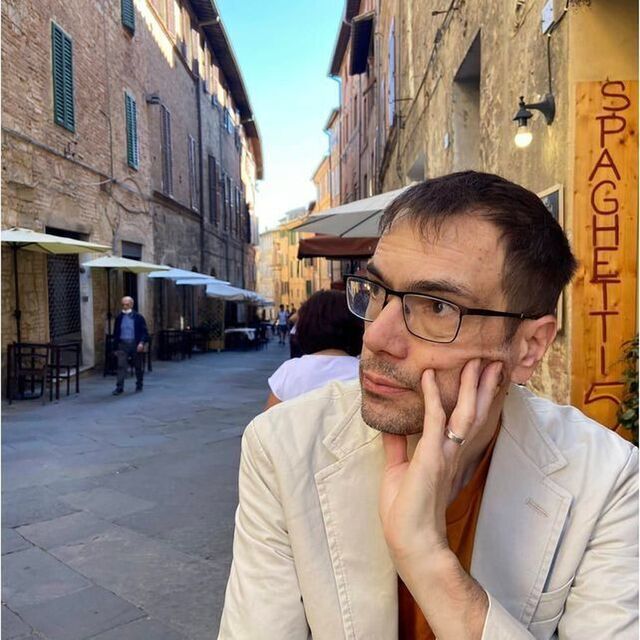
Career paths are rarely linear. Mine certainly was not. Before coordinating multi-county disaster operations as a regional emergency management director, I trained as a visual artist. I studied art in Italy, worked as a comic book inker, and learned to think in panels, composition, pacing, and negative space. Today, I work in a field often perceived as procedural and bureaucratic—yet I rely daily on skills first developed through artistic practice.
This session explores the unexpected connection between creative training and crisis leadership. In comic illustration, an inker brings clarity to complexity. Structure gives shape to chaos. Composition controls focus. Timing shapes narrative tension. These same principles apply in disaster coordination. Incident Command is a framework that provides form under pressure. Field responders bring skill and discipline, but leadership requires understanding flow, perspective, balance, and the human impact behind every decision.
Beyond logistics, disaster response is deeply human work. It involves emotional weight, moral ambiguity, and the responsibility to stabilize trust when communities are vulnerable. Art education does not just teach technique; it teaches observation, interpretation, restraint, and empathy. It teaches how to see. This presentation reflects on how creative training prepared me to navigate ambiguity, communicate under stress, and lead within structured systems. It also challenges the assumption that artistic careers and public safety careers exist in separate worlds.
For students and emerging professionals, this session offers a broader message: the skills developed through creative practice—composition, improvisation, narrative awareness, and disciplined execution—are not confined to studios or galleries. They are transferable, powerful, and urgently relevant in complex, real-world environments. Resilience is built not only by infrastructure and policy, but by leaders who can see clearly, adapt creatively, and hold steady when the lines are not yet fully drawn.
Area 7 Regional Response Manager, Kentucky Emergency Management
Jason York is the Regional Response Manager for Area 7 in Kentucky Emergency Management. He is one of the founding members of WARN (Weather Awareness for a Rural Nation), a group dedicated to resolving the issue of getting weather alerts and education to the vulnerable population... Read More →
Friday September 25, 2026 2:45pm - 3:15pm EDT 330EGatton Student Center, 160 Ave of Champions, Lexington, KY 40508
Vermont's arts and cultural sector, including artists, museums, historical societies, libraries, archives, and performing arts organizations, is as vulnerable to disaster as any other part of the state's infrastructure. For years, this sector lacked a coordinated voice in emergency preparedness and response.
This session traces the development of the Vermont Arts and Culture Disaster and Resilience Network (VACDaRN), a statewide initiative built to change that. VACDaRN grew out of a collaborative organizing process in 2018–2019, bringing together artists, archivists, conservators, emergency managers, historic preservationists, humanities organizations, and librarians to define shared priorities and lay the groundwork for a functional mutual aid network. What emerged was a partnership anchored by the Vermont Arts Council and the Vermont State Archives and Records Administration, and guided by a broad steering committee that reflects the full diversity of the state's cultural community.
Since its founding, VACDaRN has been tested by real disasters. The network mobilized resources in response to the COVID-19 pandemic, and again following major flooding events in both 2023 and 2024; events that caused significant damage to cultural institutions and individual artists across the state. Each crisis has sharpened the network's tools, deepened its partnerships, and clarified what a small, rural state needs to protect its cultural heritage. This session will offer an honest look at the challenges and opportunities of building disaster resilience infrastructure in a rural context where geography, limited resources, and a dispersed population provide challenges. We will share what has worked, what hasn't, and what we are still figuring out.
Attendees will leave with practical insights applicable to their own communities and regions, whether urban or rural, large-scale or grassroots.
High-angle rescue is one of the most technically demanding disciplines in emergency response, requiring precision, advanced rigging systems, and training environments that simulate real-world vertical challenges. While fire and rescue teams often rely on specialized facilities, theaters—equipped with complex rigging systems, fly systems, and overhead structures—represent an underutilized training resource.
This research explores the emerging partnership between performing arts venues and technical rescue teams to support high-angle rescue training in theaters. Drawing on industry standards from both entertainment rigging and technical rescue fields, this research addresses what each stakeholder must understand before engaging in this work. For venue managers, the session outlines key considerations around safety, liability, and operational readiness, including the need for documented emergency procedures and safe working conditions to reduce risk exposure. For rigging professionals, the discussion focuses on communicating system limitations, including working load limits, inspection requirements, and the risks of applying theatrical rigging systems beyond their intended use without proper engineering oversight. For fire and rescue teams, the session raises critical questions about site-specific hazards, anchor selection, and adapting NFPA-aligned rope rescue practices to unconventional environments such as theaters.
Rather than prescribing a one-size-fits-all model, this session is structured around the questions that must be asked and answered to build safe, effective partnerships. Questions include what structural information must be shared? How do load ratings translate between entertainment and rescue contexts? What training modifications are required in a theater setting? What liability and insurance considerations must be negotiated? And how do all parties define “safe use” when repurposing theatrical infrastructure?
Attendees will leave with a practical framework for initiating cross-sector collaboration, a checklist of critical questions for each stakeholder group, and a clearer understanding of how theaters can responsibly support high-angle rescue training. At its core, this session positions theaters not just as performance spaces, but as potential partners in public safety training if approached with the right expertise, communication, and shared commitment to safety. This research was conducted with theater rigging/supplier representatives and a local fire rescue team chief.
When disaster strikes, communities lose more than infrastructure. They also lose agency.
Make-Break-Transform is a creative resilience framework developed over 15 years of arts-based practice across the United States and Central America, now proposed as a deployment model for the late recovery phase, when outside support has largely withdrawn.
The process is simple: participants make something meaningful, break or alter it, and transform the pieces into something new. Destruction becomes the raw material for regeneration. The framework can be adapted to any arts process and works with children, teens, and adults in trauma and non-trauma settings. Volunteers, artists, teachers, churches, and local NGOs have been trained to facilitate it. In Guatemala, local partners now independently run camps, host retreats, and expand into new communities, a multiplication model built through sustained, trust-based partnership.
Applying this framework in disaster recovery contexts raises a critical question: is the break phase appropriate for communities that have already experienced involuntary destruction? This session argues yes, when done with care. One thing disaster can take from people is agency. Make-Break-Transform returns it. The break is chosen, facilitated, and witnessed. That distinction makes the framework relevant to recovery work and demands trauma-informed facilitation. Drawing on a cross-cultural partnership approach, the deployment model enters communities alongside local arts organizations, offers local-informed programming, trains local facilitators, and shepherds a collective community project before exiting with capacity for continued, community-led work. While this application is aspirational rather than implemented, the underlying framework and multiplication model are well-tested.
This session invites practitioners and emergency management professionals to examine Make-Break-Transform as a transferable model that treats communities not as recipients of healing but as agents of their own transformation. Attendees will leave with a working understanding of the framework, its facilitation principles, and a proposed deployment model ready for adaptation in their own contexts.
Independent Consultant & Business Owner, Michelle Rene Hill
I’m a graduate student in Arts in Medicine at the University of Florida and Vice Chair of Athentikos, an international arts-based nonprofit. Before and alongside graduate study, my work has included business ownership, marketing, project management, nonprofit leadership, community... Read More →
Friday September 25, 2026 3:30pm - 4:00pm EDT 330EGatton Student Center, 160 Ave of Champions, Lexington, KY 40508
The 2022 fire that destroyed the Masonic Temple in Zanesville, Ohio, serves as a harrowing case study for arts administrators, urban planners, and community leaders. Built in 1902 and listed on the National Register of Historic Places, the Temple had evolved from a fraternal lodge into a vital artist center. It housed many studios where local creatives worked and sold their art. In a single night, a fire sparked by a poorly extinguished cigarette reduced this century of history to ash, displacing an entire creative ecosystem.
This session moves beyond the tragedy to explore the mechanics of Arts Emergency Management as a tool for both protection and healing. The loss in was not just architectural; it was the destruction of a collaborative spirit. In the aftermath, the community shifted from a unified "we" to a fractured "me not them" as artists scrambled for individual studio spaces across the county.
By analyzing the fire, this case study addresses three critical pillars of disaster resilience: proactive risk mitigation, digital stewardship and documentation, and rebuilding the social infrastructure. The first pillar examines how simple fire safety protocols and other emergency management techniques can be in place in case there is a fire, which indeed occurred, and how "living history" buildings require specialized emergency management plans that balance historic preservation with modern safety standards.
One of the most profound losses was the absolute disappearance of years of work. The talk explores how documenting art digitally acts as a form of cultural stewardship, ensuring an artist’s legacy survives even if their physical canvas does not. Finally, we discuss how emergency management can honor the past by formalizing the bonds of the community. By creating shared safety compacts and mutual aid agreements, arts organizations can transform the memory of the Masonic Temple into a pathway for a more resilient, connected, and protected future.
Joshua received his BA from Warren Wilson College, a small liberal arts college outside of Asheville NC, where he majored in Fine Arts/Theatre. After a 12-year career in IT that included Director of Information Technology and Director of Operations, Joshua moved to Berea KY, returning... Read More →
Friday September 25, 2026 4:00pm - 4:30pm EDT 330EGatton Student Center, 160 Ave of Champions, Lexington, KY 40508
In this presentation, we will discuss how the Alianza Cultural para Emergencias de Puerto Rico has designed and Implemented educational programs and the impact they have had on building our local response network.
Following Hurricane Maria's impact in 2017, several challenges arose, among them: the lack of a local network to respond to emergencies involving heritage collections. In response, the Alianza Cultural para Emergencias de Puerto Rico (Alliance for Cultural Emergencies in Puerto Rico) (ACEPR) was established in 2019 by a diverse group of professionals from various institutions and private practices, all trained in emergency preparedness and response. Our goal is to assist cultural, LAM, and arts organizations throughout the Archipelago in minimizing damage to their collections during natural hazards or man-made disasters. We believe our value lies not only in building capacity but also in doing so in our own language, as there is a notable lack of emergency preparedness and response resources available in Spanish. Additionally, we focus on the unique characteristics of Puerto Rico and resource availability in our communities.
Throughout the years, we have implemented various initiatives, including workshops, social media educational campaigns, and hands-on projects. These efforts emphasize our long-term goal of fostering connections among colleagues to build a local network ready to support one another when needed. Our approach to achieving this goal has been through training on emergency management and preservation practices using the train-the-trainer method. Since 2020 we have impacted over 900 people (practitioners and students) and offered over 30 unique workshops (including multiple series) on topics such as emergency preparedness, response, and recovery for cultural heritage collections, risk assessment, climate change impacts, the development and implementation of emergency plans, salvage and stabilization of damaged collections, and collection documentation, digitization, and inventory practices. In 2025 we launched our most recent initiative, “Digital documentation during cultural emergencies.” Using the KoboToolbox community free plan, we trained over 72 professionals across the Archipélago to build our first mutual aid network, which can be deployed in a local emergency.
In this presentation, we will discuss how we have designed and implemented our educational program and the impact it has had in Puerto Rico. We will present examples of successful training programs and outline our next steps in building our local network through education activities.